
Al Capone: the financial evidence that brought down a Chicago crime boss
A Treasury investigation reconstructed Capone’s income and secured five tax convictions in 1931. An eleven-year sentence took him from Chicago to federal prison, including Alcatraz.
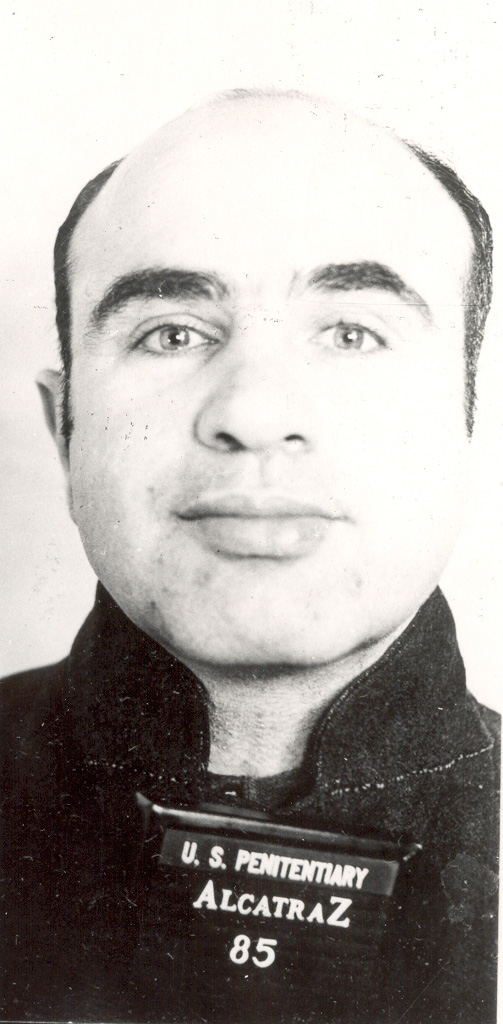
A criminal business built during Prohibition
Alphonse Capone arrived in Chicago around 1920, joining the organisation in which Johnny Torrio was an influential figure. Prohibition created a lucrative market for illegally produced and distributed alcohol. Capone became the organisation’s leader in 1925, after Torrio survived an attack and retired from Chicago. Illegal alcohol and gambling formed part of a network whose influence also reached legitimate businesses and public officials.
The violence surrounding that organisation made Capone nationally notorious. The FBI’s history attributes the 1929 St. Valentine’s Day Massacre to the Capone mob while noting that Capone himself was in Florida. That attribution is historical context; his eventual eleven-year sentence arose from tax offences, rather than a conviction for that massacre.
Reconstructing income without a conventional paper trail
Treasury investigators faced a practical obstacle: Capone had not filed returns for the years under investigation, and much of his financial activity involved cash. Special Agent Frank Wilson’s report describes a case assembled from transactions, witnesses and fragments of records rather than a set of accounts neatly identifying the defendant’s income.
One useful record came from the Hawthorne Smoke Shop, a gambling establishment in Cicero. Investigators examined its daily profit entries, compared handwriting and traced former employees who could explain the book. The task was to connect the organisation’s revenue to Capone personally. Evidence that gambling produced money was only one part of establishing that he received taxable income and deliberately evaded the tax.
Witnesses connected the money to its owner
Wilson’s March 1931 progress letter shows investigators testing that connection. He reported statements from a minister and a Cicero property dealer concerning Capone’s admissions of ownership of the gambling establishment. The surviving correspondence captures the methodical work behind a case often reduced to the phrase ‘caught for taxes’: records had to be understood, ownership established and witnesses found.
Other federal work addressed Capone’s dealings with the courts. When illness was offered as a reason he could not attend a grand jury, Bureau agents investigated his activities in Florida. That inquiry contributed to a contempt case. It was separate from the Treasury investigation that produced the major tax sentence, although both increased federal pressure on him.
Five guilty findings and eleven years
The original verdict preserved by the National Archives is dated 17 October 1931. Wilson’s report identifies the guilty findings as evasion of income tax for 1925, 1926 and 1927, and failure to file returns for 1928 and 1929. Judge James H. Wilkerson imposed the sentence on 24 October: the arrangement of concurrent and consecutive terms totalled eleven years, with a $50,000 fine.
Capone continued to challenge the judgment. In 1937, the Seventh Circuit dismissed an attempt to vacate part of the sentence. Its opinion explained that failure to file a return and evasion of tax were distinct offences. An acquittal on one charge therefore did not automatically invalidate a guilty finding on the other.
From Atlanta to Alcatraz
Capone served time in Atlanta before being transferred to Alcatraz in 1934. The island prison was intended to restrict outside contact and concentrate prisoners whom the federal system considered difficult to manage. Its location in San Francisco Bay made it an unusually isolated place to hold a man whose power had depended on an organisation beyond the prison walls.
The Bureau of Prisons describes a tightly regulated daily routine: food, clothing, shelter and medical care were rights, while visits, correspondence, recreation and other privileges had to be earned. Capone’s notoriety did not change the institution’s purpose. The National Park Service records ordinary work assignments, including laundry work and library deliveries, during his imprisonment.
Release, illness and the limits of the legend
Capone’s health deteriorated in custody, and by 1938 he required treatment in the prison hospital. He subsequently left Alcatraz for another federal institution. He was released in November 1939, having served only part of the eleven years imposed. His family took him for hospital care before he returned to Florida.
He did not resume his former role in Chicago. Capone died on 25 January 1947. The surviving tax files explain the prosecution more precisely than his public image does: investigators established income and offences that could be proved in a federal court. The conviction’s significance lies in that evidential work, while the wider violence of his organisation remains a separate part of the historical record.
Case timeline
Capone takes over the Chicago organisation after Johnny Torrio retires.
A jury returns guilty findings on five tax counts.
Judge James H. Wilkerson imposes terms totalling eleven years and a $50,000 fine.
Capone is released after serving part of his sentence.
Capone dies in Florida.
Sources & case status
Capone’s sentence covered three tax-evasion felonies and two failures to file returns. The eleven years imposed should not be confused with time served. The dates here follow the original verdict, the IRS agent’s contemporary report and the judicial record; some later official summaries contain conflicting dates.
- FBI: Al Capone case historyFederal Bureau of InvestigationCareer, historical attribution of the massacre, custody, release and death. Its conflicting 1931 dates are superseded here by original records.
- IRS: Special Agent Frank Wilson’s report, 21 December 1933Internal Revenue ServiceFinancial evidence, gambling records and witnesses; verdict and sentence at printed report pages 56–57.
- IRS: Frank Wilson’s investigation update, 27 March 1931Internal Revenue ServiceContemporary description of evidence connecting Capone to the gambling establishment.
- FBI: How the Law Finally Caught Al CaponeFederal Bureau of InvestigationBureau’s contempt investigation and Treasury’s separate tax work.
- National Archives: Al Capone’s original guilty verdictThe original court document is dated 17 October 1931.
- United States v. Capone, 93 F.2d 840 (7th Cir. 1937)Original court record reproduced by JustiaPrimary appellate opinion reproduced by Justia; confirms the sentencing date and dismissal of the 1937 challenge.
- Federal Bureau of Prisons: Alcatraz historyFederal Bureau of PrisonsInstitutional purpose, prison routine and privileges.
- National Park Service: U.S. Penitentiary AlcatrazNational Park ServiceIsolation and the federal government’s purpose in establishing the prison.
- National Park Service: The Rock, a history of Alcatraz IslandNational Park ServicePrinted page 65 describes Capone’s work, hospital treatment, later transfer and death. Sentence details are taken from the original IRS and court records.
This feature describes the cited historical record. It is not a live custody or court-docket service.